Field note · 18 November 2026
Pop-up wheel sorters: the answer for mixed cartons and bags
Wheels that rise through a roller bed can divert almost anything that has a flat enough face to ride on them. That flexibility is why the technology survives next to far faster sorters.
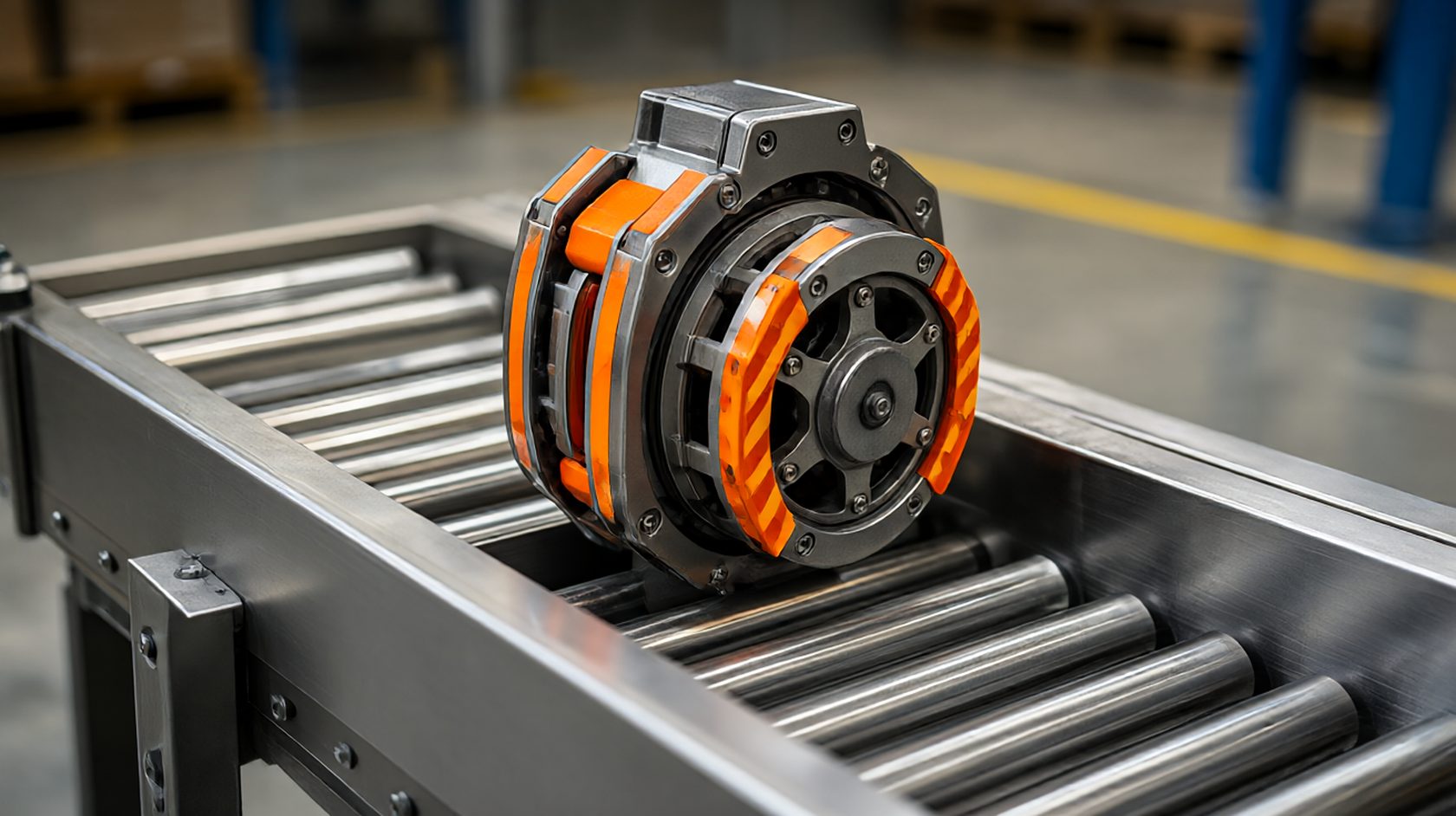
01How a wheel module diverts
A pop-up wheel module sits between the rollers of a roller conveyor. When a parcel arrives, a set of angled wheels rises through the gaps, lifts the parcel a few millimetres off the rollers, and drives it sideways.
The wheels are set at a fixed angle, usually 30 degrees, and the module is chosen for left or right diversion. There is no rotation and no cell: the divert direction is built into the module.
Because the lift is small and the contact is distributed, the technology handles non-rigid items better than a belt divert does. A polybag that would slide on a belt will still ride on a set of wheels, because the wheels find the load rather than the load finding the belt.
02The roller bed it sits in
The module is only half the machine. The roller bed in front of it has to present the parcel square and at a controlled speed, or the wheels will divert a parcel that is already rotating.
Roller pitch matters more than roller diameter. A 60 mm pitch bed will not swallow a parcel with a 40 mm foot, and the wheels that rise through it will catch the parcel's base unevenly.
The bed also has to be powered through the divert zone. A gravity section feeding a divert is a section that changes speed with every parcel's weight, and the wheels cannot compensate.
03Where the numbers sit
A pop-up wheel module is typically rated for 1,000 to 2,500 items per hour per divert, depending on parcel weight, module length and how much of the line is dedicated to that divert.
The rate falls quickly with weight. A 30 kg carton needs a longer module and a lower wheel speed, and the module may be rated for only 800 items per hour at that weight.
The flexibility is real but not unlimited: the same module that handles a 5 kg polybag handles a 25 kg carton, but not at the same rate. The line's rate is then set by the heaviest item that must divert, not the average.
04Why it survives next to faster technology
Every sorter on the market is faster than a pop-up wheel line. A tilt tray or a cross-belt will move three times the items in the same footprint, and every integrator knows it.
The reason the wheel module persists is the parcel mix. In operations where a third of the volume is bags, soft packs or irregular cartons, the faster sorters spend their advantage on exceptions, and the wheel line quietly outperforms them on the mix that actually arrives.
The second reason is the retrofit. A wheel module drops into an existing roller line, with no new carrier fleet and no new footprint. That is a capital decision as much as an engineering one.
A line built around wheel modules is a line that accepts variation. A line built around a high-speed sorter is a line that optimises the standard parcel and penalises the rest.
05The maintenance list that keeps it honest
Wheels lose grip as they wear, and a worn set does not fail loudly: the divert becomes a nudge, and parcels start arriving at the chute late and off square.
The lift mechanism is the other wear item. A module that rises slowly will catch the parcel late, and a module that does not fully retract will catch the next parcel's base.
Both are visible in a weekly check with a test parcel: time the rise, look at the divert point, and confirm the wheels sit below the roller surface when idle.
06Wheel types and the grip they offer
The wheels are usually polyurethane or rubber, and the choice is a trade between grip and gentleness. A hard wheel grips a carton and marks a soft pack; a soft wheel is kind to bags and slips on a wet or dusty carton.
Wheel diameter matters for the same reason: a larger wheel rolls over a small foot more easily, and a smaller wheel finds the gaps in a palletised base.
The angle of the wheel axle sets the divert direction, and it is fixed at build. A module cannot be re-angled on site without changing the whole assembly, which is why the divert layout is decided early.
The grip also depends on the load per wheel. A module with eight wheels shares the parcel's weight across eight contact points, and a module with four wheels carries twice as much on each.
07The divert controller and the parcels it releases
The module is triggered by a sensor at the entry, and the controller decides whether to raise the wheels or let the parcel pass. That decision is a comparison between the parcel's destination and the module's chute.
A controller that has lost its position reference will raise the wheels for every parcel, which turns the module into a full-time divert and blocks the line behind it.
The reference is a encoder or a photo-eye count, and it drifts with belt slip. The drift check is a test parcel released at a known point, and the module's response time is the measurement.
The controller's log is the only record of what the line decided. A log that records only faults tells you nothing about the decisions that caused them.
08Retrofitting into an existing roller line
The retrofit case is the module's strongest argument: it drops into a roller bed that already exists, and the line gains a divert without a new footprint.
The constraints are the roller pitch, the bed's power and the frame's height. A bed with a 100 mm pitch may not have room for the module's wheels, and a bed with a gravity section cannot hold the parcel steady enough for a reliable divert.
The frame height is the quiet constraint: the module raises the parcel a few millimetres, and a bed that is already at the top of its adjustment has no room to give.
A retrofit survey should measure all three before the module is ordered. The survey takes an hour and prevents a return.
09The parcel that arrives on the wheels
A module triggered late will meet the parcel with the wheels still rising, and the parcel will be lifted at its front edge and tipped toward the chute before the wheels have grip.
The indication is a parcel arriving at the chute face-down or rotated ninety degrees. The fix is the trigger's position or the controller's delay, not the wheel speed.
Trigger timing is set with a test parcel at three different line speeds. A module that is correct at one speed and late at another is a module whose sensor is too far downstream.
The delay value belongs in the maintenance file. A controller that has been reset to defaults has lost the setting, and the line will start tipping parcels for no visible reason.
10What the module will not do
It will not sort a parcel that has no flat face. A round drum or a loose bundle will roll on the wheels, and the divert becomes a nudge that sends the parcel into the guard rail.
It will not sort a parcel heavier than the module's rating without a longer lift and a lower speed, and the rating is per module rather than per wheel.
It will not hold a parcel in place while it waits. The module diverts or it passes, and a line that needs accumulation needs a separate accumulation zone upstream.
Knowing these limits is the difference between a wheel line that works and one that is blamed for the mix it was never designed for.
11The guard rail that saves a parcel
A divert that overshoots puts the parcel into the guard rail, and the rail is cheaper than the parcel. Rails that are too low let a tall carton tip over the top.
The height should be set for the tallest item that can divert, not the average. A rail that is thirty centimetres high will not hold a sixty-centimetre carton at speed.
The module that fits a standard 60 mm roller bed and handles the mixed carton and bag stream described here is the pop-up wheel sorter, and its lift height is the number to check against the roller top.
What to check
- Roller pitch and bed power through the divert zone
- Module length and wheel speed for the heaviest diverting item
- Test parcel used for weekly rise/retract checks
- Chute throat sized for the wheel line's entry angle